
. Introduction
Digital marketing enables companies to engage with potential customers, expand their reach across online platforms, establish a recognizable brand identity, and generate better business opportunities. In today’s
technology-driven world, people spend a significant amount of time online searching for products, comparing services, watching videos, and connecting with brands. This creates valuable opportunities for businesses to connect with their target audience through digital platforms.
Whether you own a small business, manage a large company, or work as a freelancer, digital marketing can help you achieve your business goals. From optimizing websites for search engines to running social media campaigns, paid advertisements, email promotions, and creating valuable content, businesses can use various digital strategies to build a stronger online presence.
In 2026, digital marketing continues to evolve with Artificial Intelligence (AI), automation, personalized advertising, and data-driven marketing strategies. Understanding these changes is essential for businesses that want to remain competitive in the digital world.
What Is Digital Marketing?
Digital marketing is the practice of showcasing and advertising a business, its products, or services using internet-based platforms and modern digital tools. It helps brands connect with their target audience through websites, search engines, social networks, email campaigns, and paid online promotions.
Unlike traditional marketing methods such as newspapers, television, and billboards, digital marketing provides opportunities to reach specific audiences based on their interests, location, age, and online behaviour.
For example, a business selling fashion products can use Instagram advertisements to target people interested in fashion. In the same way, a digital marketing company can improve its website rankings through SEO and reach potential clients who are looking for online marketing solutions on search engines.
The main objective of digital marketing is to attract the right audience, generate quality leads, increase conversions, and build long-term customer relationships.
Why Is Digital Marketing Important for Businesses?
Digital marketing plays an important role in modern business growth. Customers increasingly depend on the internet to discover brands and make purchasing decisions.Companies that lack a well-established digital presence risk losing potential customers and missing important growth opportunities in the online marketplace.
1.Increases Online Visibility
A well-planned digital marketing approach strengthens a brand’s online visibility, making it easier for potential customers to discover the business through search engine optimization, engaging social media campaigns, and targeted online advertisements.
2.Cost-Effective Marketing
A well-optimized website can also appear in Google search results and attract organic traffic.Traditional advertising can require significant investment. Digital marketing offers flexible budget options for businesses of different sizes.
For example, small businesses can start social media campaigns with a limited budget and gradually increase their investment based on performance.
3. Reaches the Right Audience
A major benefit of digital marketing is its ability to reach specific groups of people based on their interests, prefer
ences, and online behaviour. Businesses can create campaigns based on demographics, interests, location, search behaviour, and other relevant factors.
This helps marketers deliver relevant messages to potential customers.
4. Improves Customer Engagement
Through comments, messages, stories, reels, and live sessions, brands can build relationships and understand customer needs.
5. Measures Marketing Performance
Digital marketing provides measurable performance data. Marketers can analyse website traffic, impressions, clicks, engagement, leads, conversions, and advertising costs.
These insights help businesses understand what is working and improve future campaigns.
Top Digital Marketing Strategies in 2026
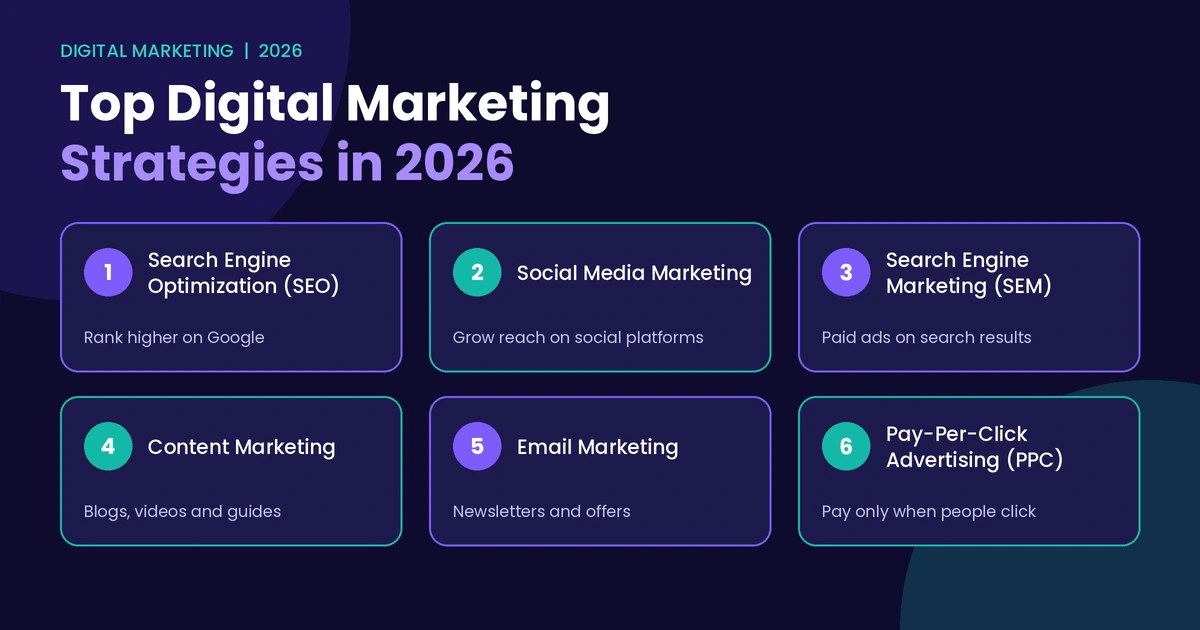
To achieve successful online growth, businesses need to use different digital m
arketing strategies together. Each strategy serves a specific purpose in attracting, engaging, and converting customers.
1. Search Engine Optimization (SEO)
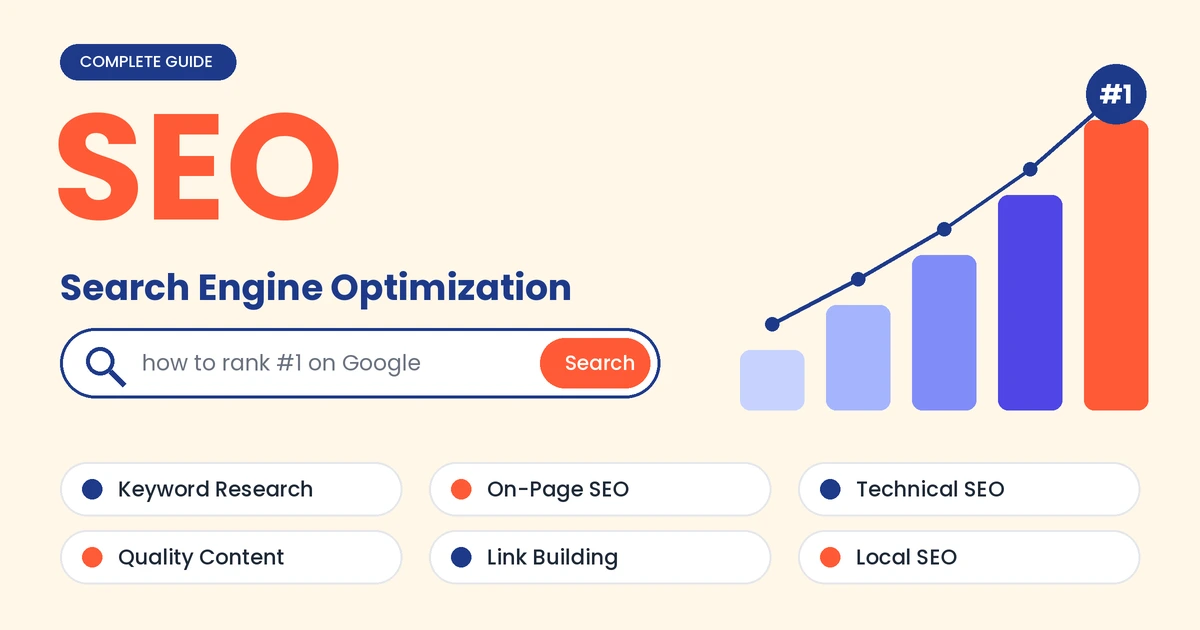
Search Engine Optimization (SEO) is a process of improving a website’s ranking on search engines naturally, helping it gain better visibility and attract organic traffic without relying on paid advertisements. It helps businesses bring relevant visitors to their websites by making
their content easier to discover when people search for related products, services, or information online.
For example, if someone searches for “Best Digital Marketing Agency in Kerala”, websites optimized for relevant search terms may appear in the search results.
SEO includes three major areas:
– On-Page SEO: Optimizing website content, headings, keywords, images, internal links, and meta descriptions.
– Off-Page SEO: Building website authority through quality backlinks, brand mentions, and other external signals.
– Technical SEO: Improving website speed, mobile usability, indexing, crawlability, and website structure.
2. Social Media Marketing
Social media has become an important communication channel between brands and customers. Businesses can use creative posts, reels, videos, stories, and interactive content to increase their reach.
Some effective social media marketing techniques include:
– Publishing valuable and engaging content.
– Creating short-form videos and reels.
– Using relevant hashtags and keywords.
– Collaborating with influencers and content creators.
– Responding to comments and customer messages.
– Maintaining a consistent posting schedule.
3. Search Engine Marketing (SEM)
Search Engine Marketing focuses on increasing website visibility through paid search advertising. Google Ads is one of the most popular platforms used for this purpose.
Businesses can display advertisements when users search for specific keywords related to their products or services.
For example, a company offering web development services can create a Google Ads campaign targeting keywords such as “Website Development Company” or “Professional Web Design Services”.
Important SEM activities include keyword research, campaign setup, audience targeting, ad copywriting, bidding strategies, and conversion tracking.
SEM can help businesses reach potential customers quickly when campaigns are properly planned and optimized.
4. Content Marketing
Content marketing involves developing and distributing informative, engaging, and relevant materials to attract potential customers and maintain their interest.
Rather than focusing solely on product promotion, businesses share helpful resources, industry insights, and educational content that address audience needs, answercommon questions, and provide practical solutions.
-Blog articles.
-Educationalvideos.
– Infographics.
– Case studies.
– E-books.
– Social media posts.
– Industry guides.
For example, a digital marketing agency can publish blogs about SEO tips, Google Ads strategies, social media growth, andwebsite optimization.
High-quality content canbuild trust, improvebrand authority, and support SEO performance.
5. Email Marketing
Email marketing is one of the effective ways to communicate with existing and potential customers.
Businesses use email campaigns to share product updates, promotional offers, newsletters, educational content, and important announcements.
A successful email marketing campaign should include:
– A clear and attractive subject line.
– Relevant and personalized content.
– A strong call-to-action.
– Mobile-friendly email design.
– Proper audience segmentation.
– Performance tracking.
Email marketing helps businesses maintain customer relationships and encourage repeat purchases.
6. Pay-Per-Click Advertising (PPC)
Pay-Per-Click advertising is an online advertising model where advertisers pay when users click on their advertisements.
Google Ads, Microsoft Advertising, and social media advertising platforms offer different PPC opportunities.
PPC campaigns can help businesses generate traffic, increase leads, promote products, and achieve specific marketing objectives.
However, successful PPC advertising requires proper keyword selection, audience targeting, budget management, landing page optimization, and continuous performance analysis.
The Role of Artificial Intelligence in Digital Marketing
Artificial Intelligence is transforming the digital marketing industry. AI-powered tools help marketers complete tasks faster, understand customer behaviour, and improve campaign performance.
In 2026, AI is becoming an important part of everyday marketing activities.
Here are some ways AI supports digital marketing:
1. AI Content Creation: AI tools can help marketers generate blog ideas, social media captions, email drafts, and advertising copy.
2. Customer Behaviour Analysis: AI can analyse customer data and identify patterns that help businesses understand audience interests and preferences.
3. Marketing Automation: Automated systems can manage email campaigns, customer follow-ups, and repetitive marketing activities.
4. Personalized Marketing: AI can help businesses deliver more relevant content, product recommendations, and advertising messages.
5. Advertising Optimization: AI-powered advertising systems can assist with audience targeting, bidding, and campaign optimization.
Although AI makes marketing more efficient, human creativity, strategic thinking, fact-checking, and understanding customer needs remain essential.
Important Digital Marketing Trends in 2026
The digital marketing industry continues to change as technology and customer expectations develop. Businesses should understand emerging trends to create effective marketing strategies.
AI-Powered Marketing
AI is becoming more widely used for content planning, customer insights, automation, and campaign optimization.
Short-Form Video Content
Instagram Reels, YouTube Shorts, and similar video formats help brands communicate messages quickly and attract audience attention.
Voice Search Optimization
More people are using voice assistants to search for information. Businesses should focus on natural-language keywords and conversational search queries.
Influencer Marketing
Collaborating with relevant content creators helps brands connect with established communities and build awareness.
Personalized Customer Experiences
Customers expect relevant recommendations and useful communication. Personalized marketing helps brands create more meaningful interactions.
Data-Driven Marketing
Businesses increasingly use analytics and performance data to understand campaign results and make better marketing decisions.
How to Create a Successful Digital Marketing Strategy
A successful digital marketing strategy requires proper planning, execution, and continuous improvement.
Follow these important steps:
Step 1: Define Your Business Goals**
Identify what you want to achieve. Your goals may include increasing website traffic, generating leads, improving sales, or building brand awareness.
Step 2: Understand Your Target Audience**
Research your audience’s age, location, interests, challenges, and online behaviour. This helps you create relevant marketing campaigns.
Step 3: Choose the Right Marketing Channels**
Select platforms based on your business goals and audience. For example, Instagram may work well for visual brands, while LinkedIn can be useful for B2B marketing.
Step 4: Create Valuable Content**
Develop informative and engaging content that addresses your audience’s needs. Maintain consistency across your marketing channels.
Step 5: Set Your Advertising Budget**
Decide how much you can invest in paid advertising. Start with a manageable budget and optimize campaigns based on actual performance.
Step 6: Track and Analyse Results**
Use tools such as Google Analytics 4, Google Search Console, and advertising platform reports to measure performance.
Step 7: Optimize Your Strategy**
Review your results regularly. Improve underperforming campaigns, test different creatives, and focus on strategies that deliver meaningful results.
Essential Digital Marketing Tools
Digital marketing professionals use different tools to manage campaigns, analyse performance, and improve productivity.
Some popular tools include:
– Google Analytics 4 – Website traffic and user behaviour analysis.
– Google Search Console – SEO performance and website indexing insights.
– Google Ads – Paid search and display advertising.
– Meta Ads Manager – Facebook and Instagram advertising.
– Canva – Graphic design and social media creatives.
– WordPress – Website development and content management.
– Semrush – SEO research and competitor analysis.
– Mailchimp – Email marketing and automation.
– Google Tag Manager – Managing website tracking tags.
Using the right tools can make digital marketing activities more organized, measurable, and efficient.
Practical Ways to Apply Digital Marketing in 2026: Strategies for Sustainable Growth
Businesses can get better results by turning marketing plans into a simple, consistent process. The ideas in Digital Marketing in 2026: Strategies should be adapted to each business.
Start by reviewing your website. Make sure pages load quickly, work well on mobile devices, explain your services clearly, and include useful calls to action. Add relevant keywords naturally to page titles, headings, URLs, and content so visitors and search engines can understand each page.
Next, plan content around customer questions. Publish helpful blog posts, short videos, guides, and social media updates that solve specific problems. Reuse one strong idea in different formats to save time and keep your message consistent.
Use analytics to understand which channels bring valuable visitors, enquiries, and sales. Track meaningful results instead of focusing only on likes or impressions. Test one change at a time, such as a headline, image, audience, or landing page, and compare the results.
Finally, combine automation with a human touch. Automated emails and follow-ups can save time, but personal responses build trust. Review your strategy regularly and improve it using customer feedback and campaign data. These steps make Digital Marketing in 2026: Strategies more actionable and help businesses build lasting online relationships.
Conclusion
Digital marketing has become an essential part of business growth in the modern world. From SEO and social media marketing to Google Ads, content marketing, and email campaigns, businesses have many opportunities to connect with their target audiences.
With the growing influence of Artificial Intelligence, automation, and data-driven strategies, the digital marketing industry will continue to evolve. Businesses that understand these changes and focus on providing valuable customer experiences can build stronger online brands.
Whether you are a business owner, student, freelancer, or marketing professional, learning digital marketing can open new opportunities. Start by understanding the fundamentals, practising different strategies, and keeping yourself updated with industry trends.
**The future of business is digital, and the right digital marketing strategy can help turn online opportunities into real business growth.**
Home