
SEO vs Google Ads: Which Is Better in 2026?
In the modern digital world, having a website is only the first step towards building a successful online business. Companies also need effective ways to help potential customers discover their products and services. With millions of people using search engines to find information, compare products, and make purchasing decisions, online visibility has become an important part of business growth.
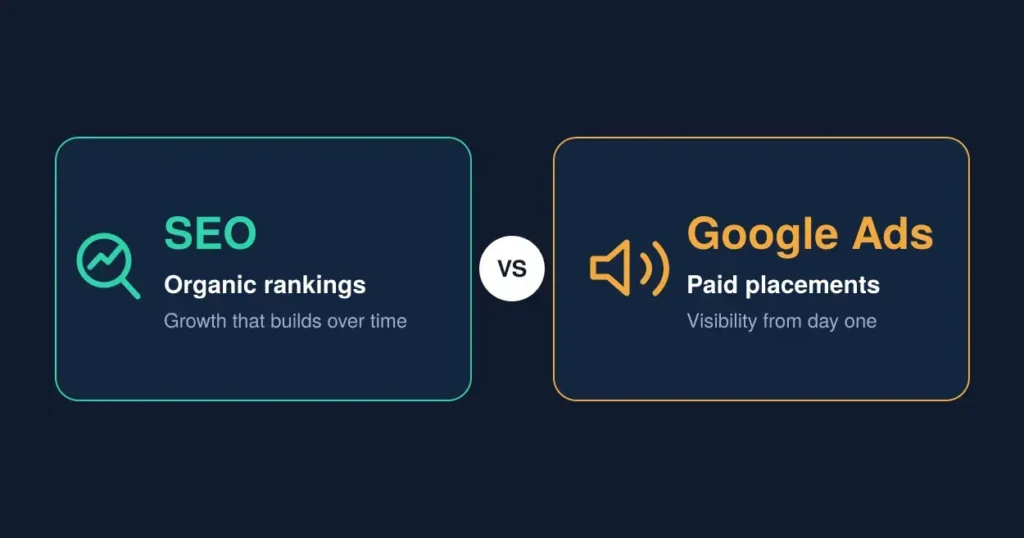
Both methods are two popular digital marketing strategies that help businesses reach people through Google. Although both methods can increase website traffic and attract potential customers, they work in different ways. SEO focuses on improving a website’s visibility in organic search results, whereas Google Ads allows businesses to promote their offerings through paid advertisements.
Choosing between these strategies depends on several factors, including marketing goals, available budget, competition, and the time required to achieve results. Understanding how each method works can help businesses develop a more effective marketing plan.
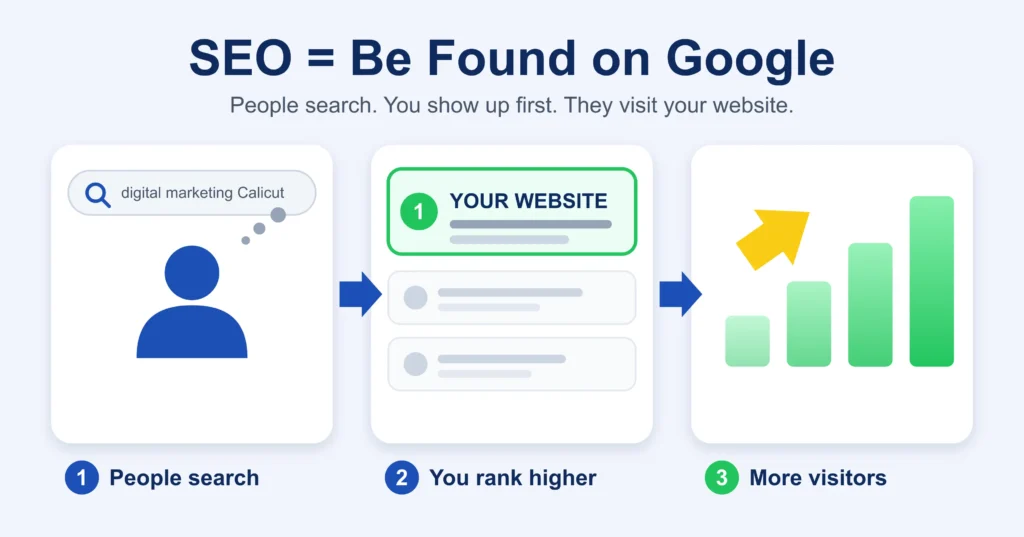
SEO is the practice of optimizing a website so that it ranks higher and attracts more visitors through organic search engine results. The main objective is to help search engines understand website content and connect it with users searching for relevant information, products, or services.
SEO involves several activities, such as researching keywords, improving website content, optimizing page titles and meta descriptions, enhancing website speed, and ensuring that pages are easy to navigate. Technical improvements and relevant internal links can also help search engines discover and understand website pages.
Content quality is another important part of SEO. Businesses can publish informative blog posts, service pages, guides, and frequently asked questions to address the needs of their target audience. When website content provides useful answers and matches the intent behind a search query, it can improve the chances of attracting relevant organic visitors.
Local SEO is particularly valuable for businesses that serve customers in specific areas. Maintaining an accurate Google Business Profile, providing consistent contact information, collecting genuine customer reviews, and creating relevant location-based pages can help people discover nearby services.
For example, when someone searches for “best digital marketing agency in Calicut,” businesses with relevant websites and strong local search visibility may appear in the organic results.
Benefits of SEO
- Long-term visibility: Consistent optimization can help a website maintain a stronger presence in relevant search results over time.
- Organic website traffic: Businesses can attract visitors from unpaid search listings without paying Google for each organic click.
- Improved credibility: Useful information and a professional website can help businesses build trust with potential customers.
- Better user experience: Improvements to website structure, navigation, speed, and content can make it easier for visitors to find what they need.
- Sustainable growth: A well-maintained website can continue attracting relevant visitors as its organic visibility develops.
However, SEO requires ongoing work and patience. Results may take months to become noticeable, depending on the website’s condition, competition, and optimization efforts. Search rankings can also change, so businesses should avoid expecting guaranteed positions.
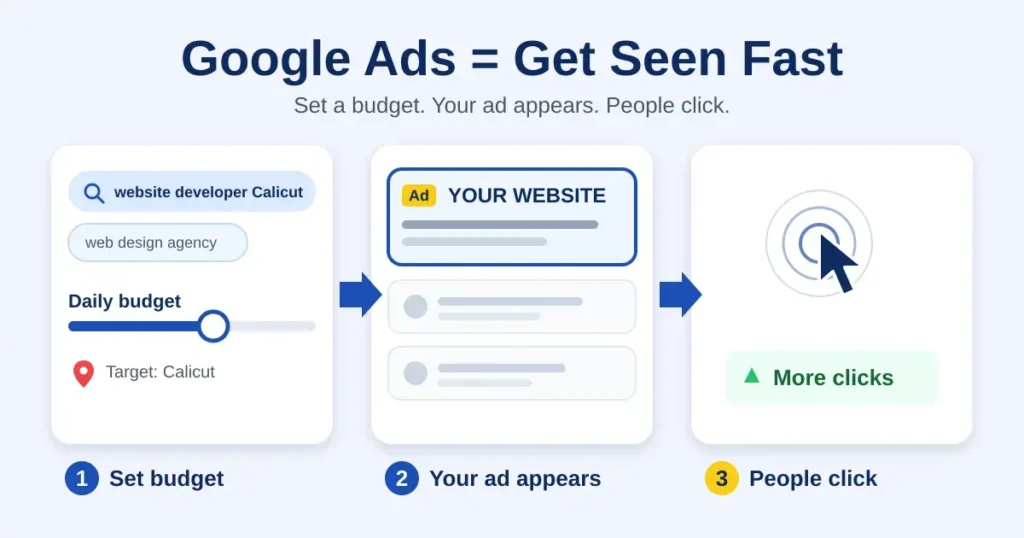
Google Ads is an online advertising platform that enables businesses to promote their products and services through paid placements across eligible Google properties and advertising networks.
Businesses can create campaigns based on their marketing objectives, choose relevant keywords for search advertising, set budgets, and define suitable targeting options. They can also measure campaign performance using data such as impressions, clicks, conversions, and advertising costs.
One of the main advantages of Google Ads is that it can help businesses reach potential customers shortly after a campaign is approved and becomes active.Unlike organic search, which generally requires time to develop organic visibility, paid advertising can provide quicker exposure when campaigns are eligible to appear.
For instance, a company offering website development services can create a search campaign targeting people looking for website developers in a particular city. When the campaign matches a user’s search and wins the relevant ad auction, the advertisement may appear in sponsored search results.
Benefits of Google Ads
- Faster exposure: Businesses can begin reaching potential customers soon after their campaigns become active.
- Relevant targeting: Advertisers can use keywords, locations, and other available targeting options to reach suitable audiences.
- Budget management: Campaign budgets and bidding strategies can be adjusted according to business objectives.
- Performance tracking: Reports help marketers understand how advertisements perform and how much they spend.
- Campaign flexibility: Businesses can update advertisements, test different messages, and adjust campaigns according to changing needs.
Despite these advantages, Google Ads does not guarantee sales or profitable leads. Campaign results depend on competition, targeting, advertisement quality, landing page experience, and budget management. Advertising costs may also increase in competitive markets. Once campaigns stop running, the paid visibility they provide generally ends.
SEO vs Google Ads: Key Differences
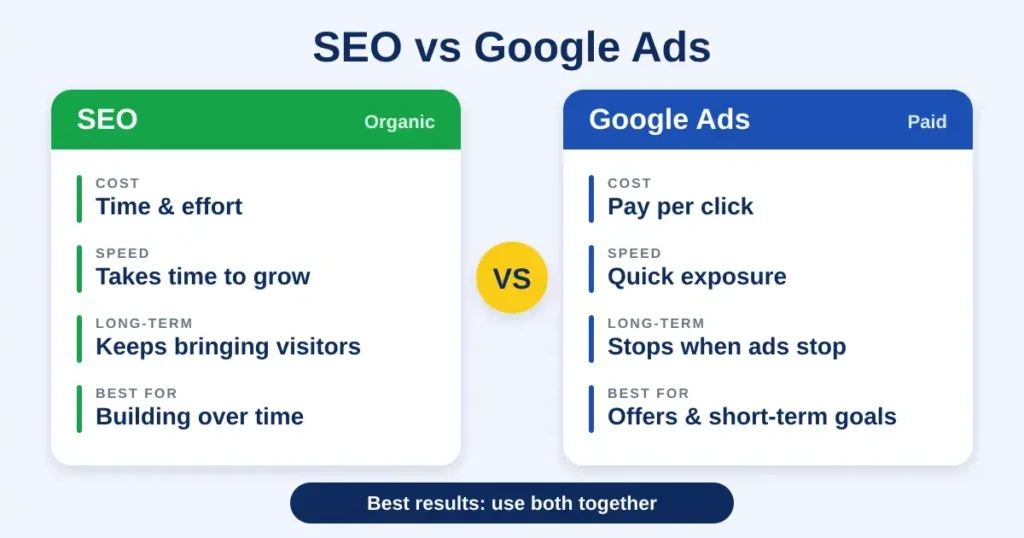
Although Both strategies can support similar business objectives, there are important differences between them.
1. Cost and Investment
SEO requires investment in website improvements, content development, keyword research, and ongoing optimization. Businesses may manage some activities internally or work with digital marketing professionals. While organic clicks do not involve a direct payment to Google, the time and resources required to improve a website should still be considered.
Google Ads involves advertising expenditure based on the campaign’s bidding model. Many search campaigns use cost-per-click bidding, meaning advertisers pay when users click their advertisements under that model. The amount spent depends on factors such as competition, bidding strategy, and campaign settings.
SEO may be suitable for businesses building their online presence over time, while Google Ads can be useful when a company has a defined advertising budget and specific short-term objectives.
2. Time Required to See Results
Organic search optimization usually takes time because search engines need to discover, process, and evaluate website content. Improvements to titles, content, technical performance, and internal links may contribute to better visibility, but the timing and extent of results vary.
Google Ads can deliver exposure more quickly once advertisements are approved and eligible to run. However, generating meaningful enquiries or sales may require campaign testing, audience adjustments, and landing page improvements.
Businesses should therefore consider whether their priorities involve developing organic visibility over time or reaching potential customers more quickly.
3. Long-Term Benefits
SEO can continue attracting organic traffic after individual optimization tasks have been completed. A useful article or well-developed service page may generate visitors over an extended period, although rankings and traffic are never guaranteed to remain stable.
Google Ads provides visibility while campaigns are eligible and active, subject to budget availability and other campaign conditions. It is particularly useful for promoting seasonal products, special offers, new services, or time-sensitive campaigns.
Using these methods together can help businesses balance long-term website development with immediate promotional needs.
4. Audience Targeting
SEO helps businesses reach people who search for relevant information, solutions, products, or services. By understanding search intent, marketers can create content that answers questions and supports users throughout their decision-making process.
Google Ads offers additional targeting options depending on the campaign type. Advertisers can target relevant search queries and locations, among other available settings. This makes it possible to focus advertising efforts on audiences who are more likely to be interested in a particular offer.
These approaches benefit from understanding customer needs. The difference lies mainly in how businesses reach those audiences.
5. Measuring Performance
SEO performance can be evaluated through organic clicks, search impressions, keyword visibility, website engagement, and conversions. Tools such as Google Search Console and Google Analytics can help businesses understand how people discover and interact with their websites.
Google Ads provides campaign data such as impressions, clicks, click-through rate, conversions, and cost per conversion when suitable tracking is configured.
For both strategies, traffic alone does not indicate success. Businesses should also consider the quality of enquiries, completed purchases, and the cost of acquiring customers.
Which Is Better for Your Business?
The best option depends on the company’s goals, resources, audience, and expected timeline. Neither strategy is automatically better for every business.
Choose SEO If:
- You want to build a stronger presence in organic search results.
- Your business can invest time in creating helpful and relevant website content.
- You aim to attract visitors without paying for each organic click.
- You want to improve website usability and establish credibility.
- You are prepared to monitor and improve your website consistently.
SEO can be particularly useful for businesses that want to build a lasting online presence and attract people who regularly search for their products or services.
Choose Google Ads If:
- You need quicker exposure for a product, service, or business offer.
- You want to promote a limited-time campaign or seasonal offer.
- You are introducing a new service and want to test customer demand.
- You have an advertising budget and clear campaign objectives.
- You want to measure paid campaign performance and adjust spending accordingly.
Google Ads can be valuable when businesses need to reach potential customers within a shorter period. However, campaigns should be monitored carefully to ensure that advertising costs are justified by the results.
A local service provider may benefit from local SEO and targeted search advertisements, while an established online store may use SEO content to attract organic visitors and paid campaigns to promote selected products. A new business might initially use Google Ads to test demand while gradually improving its website’s organic visibility.
Combining both strategies do not need to be treated as competing strategies. Using them together can help businesses increase their online visibility through both organic listings and paid advertisements.
SEO supports long-term website development by improving content, technical performance, and relevance to search queries. Google Ads can complement these efforts by helping businesses promote selected services and attract visitors more quickly.
Another advantage of combining both approaches is the opportunity to learn more about customer behaviour. Organic search data can reveal which pages attract visitors and which queries bring people to a website. Paid campaign reports can help identify advertisements and search terms associated with valuable enquiries or sales.
Businesses can use these insights to improve their overall marketing strategy. For example, if a Google Ads campaign attracts relevant enquiries for a particular service, the business could develop a detailed service page or informative blog post addressing related customer questions. This content may help improve the website’s organic visibility over time.
Landing page quality is important for both channels. Visitors should be able to understand the service, find essential information, and identify the next step without confusion. Clear contact details, useful content, relevant calls to action, and a mobile-friendly design can help create a better experience.
Regular performance reviews are equally important. Businesses should compare traffic sources, conversion rates, qualified enquiries, sales, and cost per lead to understand which activities contribute to their objectives. These measurements can help marketers decide where to allocate their time and budget.
Rather than relying entirely on website visits or advertisement clicks, businesses should focus on meaningful outcomes. The goal is not simply to attract more visitors but to reach the right people and encourage actions that support business growth.
Conclusion: Making the Right Digital Marketing Decision
These two approaches offer different ways to improve online visibility, attract potential customers, and support business growth. SEO focuses on developing a website’s organic presence, while Google Ads provides opportunities to reach audiences through paid advertising.
Before choosing a strategy, businesses should evaluate their goals, budget, competition, audience, and expected timeframe. They should also establish clear performance indicators and review their results regularly.
For many businesses, combining SEO with Google Ads can provide a more balanced digital marketing approach. Paid campaigns can help generate visibility in the short term, while SEO can support the development of organic traffic over time. When both methods are planned carefully and supported by useful content, effective landing pages, and accurate performance tracking, businesses can make better marketing decisions.
Ultimately, successful digital marketing is not simply about attracting more website visitors. It is about reaching relevant audiences, understanding their needs, building trust, and encouraging meaningful actions that contribute to business objectives.